%201.avif)

What Causes Uneven Skin Texture in Bentonville, Arkansas, and How Can You Fix It?
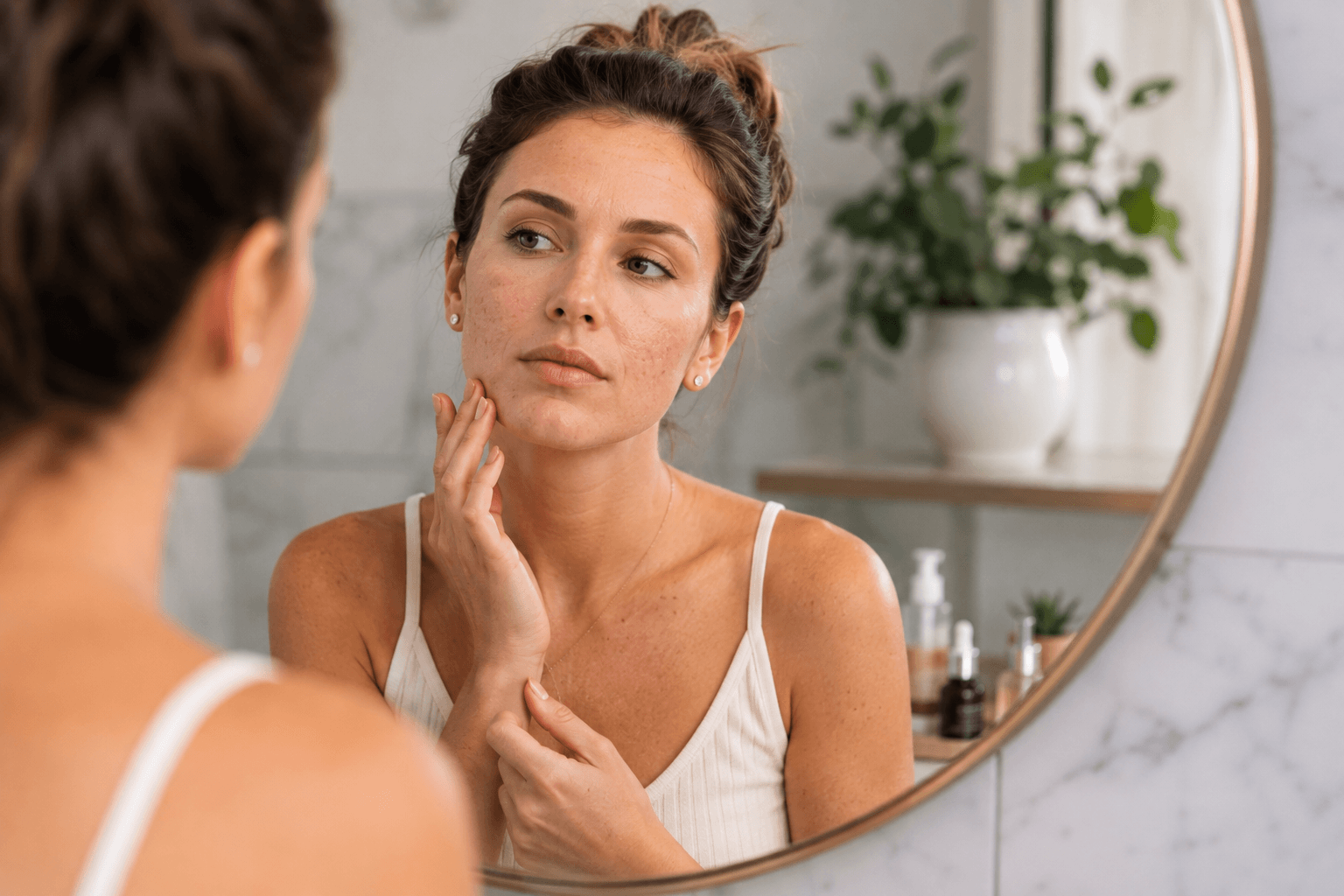
Run your fingertips across your cheek in the mirror's light and you might notice it before you ever see it: little bumps, rough patches, pores that seem to have doubled in size since your twenties. Uneven skin texture is one of those concerns that creeps up slowly, and by the time it's noticeable in photos or under makeup, most people assume it's just "how their skin is now." It isn't. Skin texture changes for specific, identifiable reasons, and understanding those reasons is the first step toward smoother, more even skin.
If you've been searching for answers about rough or bumpy skin in Bentonville, Arkansas, this guide breaks down what's actually happening beneath the surface, what tends to make it worse, and where microneedling fits into the conversation as one of the more reliable solutions available at a medical spa setting.
Updated August 2026
What Does "Uneven Skin Texture" Actually Mean?
Uneven texture isn't one single condition. It's an umbrella term that covers several visible changes to the skin's surface, including:
- Rough or bumpy patches that feel different from surrounding skin
- Enlarged or more visible pores, especially across the nose and cheeks
- Fine bumps that aren't quite acne but don't go away with regular cleansing
- A dull, uneven light reflection across the face instead of a smooth glow
- Shallow depressions left behind by old acne or chickenpox scars
Dermatologists often group these under "textural irregularities," and they can appear on their own or layered together, which is part of why they're so frustrating to treat with skincare products alone.
What Causes Uneven Skin Texture?
Is It Just Aging?
Aging plays a role, but it's not the whole story. As collagen and elastin production slow down starting in your mid-to-late twenties, skin loses some of its structural support. Without that support, the surface doesn't reflect light as evenly, and pores can appear more pronounced because the skin around them is less firm.
Could Sun Damage Be a Factor?
Cumulative sun exposure is one of the biggest contributors to textural changes, even in a place like Northwest Arkansas where summers are humid and winters are mild enough for year-round outdoor activity. UV exposure breaks down collagen fibers unevenly, which is why sun-damaged skin often feels rough in some areas and smooth in others rather than uniformly aged.
Does Acne History Matter?
Past breakouts, even mild ones, can leave behind subtle textural changes long after the redness fades. Every inflamed pimple has the potential to disrupt the collagen structure underneath, leaving a shallow scar that's easy to miss until you look closely or take a photo with strong side lighting.
What About Clogged Pores and Oil Production?
Excess oil combined with dead skin cells and environmental debris can stretch pore openings over time. Once a pore has been stretched, it rarely bounces back on its own, which is why enlarged pores tend to be a long-term cosmetic concern rather than a temporary one.
Can Dehydration and Dry Skin Cause Texture Issues?
Yes. Dehydrated skin doesn't shed dead cells as efficiently, so they build up on the surface and create a rough, flaky feel. This is especially common during Arkansas winters when indoor heating strips moisture from the air.
When Should You See a Professional About Skin Texture?
Most people try to manage texture with over-the-counter exfoliants, serums, or retinol creams first, and that's a reasonable starting point. But if you've been consistent with a home skincare routine for several months without meaningful improvement, that's usually a sign the concern lives deeper in the skin than topical products can reach. That's exactly the layer microneedling is designed to work in.
How Does Microneedling Improve Skin Texture?
Microneedling uses a device with fine, sterile needles to create controlled micro-injuries in the skin's surface. It sounds intense, but the treatment is quick and the sensation is minimal for most clients. Those tiny channels trigger the body's natural wound-healing response, which includes new collagen and elastin production. Over the following weeks, that regenerated collagen fills in the very structures responsible for rough texture, shallow scarring, and stretched pores.
Unlike topical treatments that primarily affect the outermost layer of skin, microneedling reaches the dermis, where the actual scaffolding of your skin lives. This is a big part of why it's become such a popular option at medical spas for people dealing with:
- Acne scarring and post-breakout texture
- Enlarged pores
- Fine lines that contribute to a rough appearance
- General dullness and uneven light reflection
- Early signs of sun damage on the surface
What Does a Microneedling Session Actually Involve?
A typical session starts with a consultation to look closely at your skin and talk through your goals, since texture concerns can come from different underlying causes that may call for slightly different approaches. The skin is cleansed and a topical numbing agent is usually applied to keep the treatment comfortable. The provider then moves the microneedling device methodically across the treatment area, and the entire process typically takes under an hour.
Afterward, skin often looks flushed, similar to a mild sunburn, for a day or two. This is a normal part of the healing response and not a reason for concern. Most people see their skin settle back to normal within a few days, with texture improvements becoming more visible over the following weeks as new collagen forms.
Is Microneedling Right for Everyone?
Microneedling works well for a wide range of skin types and tones, which is one of its advantages over some laser-based texture treatments that carry more risk for people with deeper skin tones. That said, it isn't the right fit for everyone. People with active acne breakouts, certain skin infections, or specific medical conditions may need to wait or explore a different approach first. A consultation is the best way to find out whether your skin is ready for treatment and how many sessions you're likely to need to see the results you want.
How Many Sessions Will You Need?
Most people considering microneedling for texture concerns benefit from a series of treatments spaced about four to six weeks apart, rather than a single session. Skin remodeling takes time, and spacing sessions out allows the collagen-building process to fully develop between treatments. Many clients notice their first improvements after two or three sessions, with continued refinement as the series progresses.
Can You Combine Microneedling With Other Treatments?
Some people pair microneedling with other advanced aesthetic skin treatments depending on what their skin needs, whether that's addressing pigmentation, fine lines, or overall skin health. If you're not sure which combination makes sense for your goals, a consultation is the best place to start, especially if you're dealing with more than one concern at once.
Frequently Asked Questions
Does microneedling hurt? Most clients describe the sensation as mild pressure or light scratching rather than pain, especially with a numbing agent applied beforehand. Any discomfort typically fades quickly once the session is finished.
How long until I see results from microneedling? Initial improvements in skin texture are often visible within a couple of weeks, though full collagen remodeling continues for up to three months after each session.
Is microneedling the same as a facial? No. While both can improve skin appearance, microneedling creates controlled micro-injuries to stimulate deeper collagen production, while a standard facial focuses on cleansing, exfoliating, and hydrating the surface layer.
Will microneedling help with acne scars specifically? Many people see meaningful improvement in shallow acne scarring after a series of microneedling sessions, since the treatment targets the same collagen structures responsible for that type of scarring.
How often should I get microneedling done? Most treatment plans involve a series of sessions spaced four to six weeks apart, followed by periodic maintenance sessions to sustain results.
So, Ready to Smooth Things Over?
Uneven texture doesn't have a single cause, and it rarely responds to a single product no matter how many serums are stacked in your skincare cabinet. What it usually needs is a treatment that works below the surface, where the real structural changes happen. If rough patches, visible pores, or leftover acne texture have been bothering you, a conversation with our team at Glotologi Med Spa is a good next step. We serve clients throughout Bentonville, Arkansas, and can help you figure out whether microneedling is the right match for your skin. Reach out to schedule a consultation, or browse our full microneedling service page to learn more about what to expect. You can also explore our other aesthetic services or see real results on our before and after page.