%201.avif)

What Causes Hair Loss, and What Are the Real Solutions in Bentonville, Arkansas?
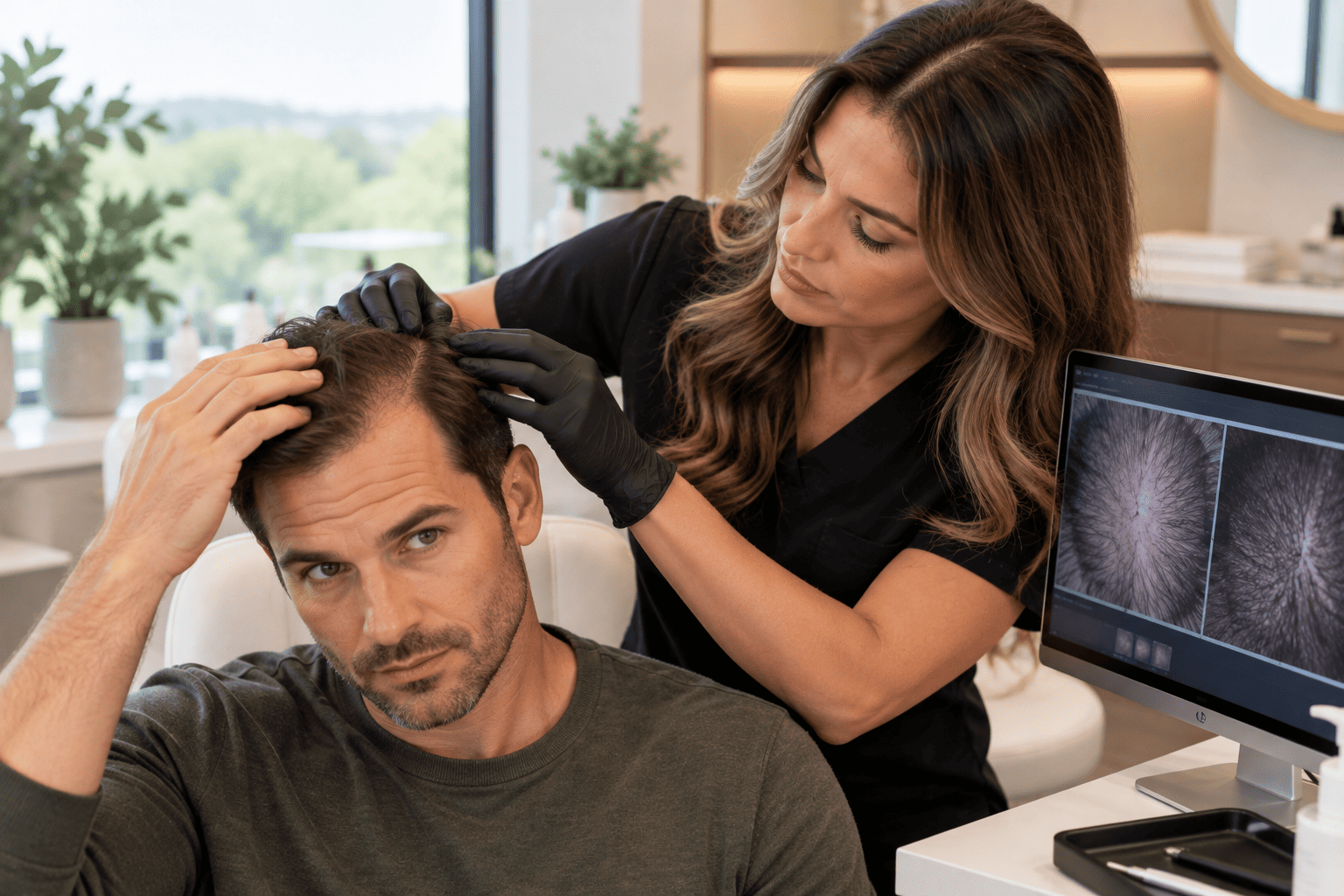
Finding more hair than usual on your brush, in the shower drain, or on your pillow can be genuinely unsettling. For a lot of people, the search for a hair loss solution starts with panic and a lot of scrolling, but the truth is that hair loss has several distinct causes, and understanding which one applies to you matters far more than jumping straight to a product or treatment.
In Bentonville, Arkansas, we talk with a lot of people who are surprised to learn that hair thinning is often connected to something happening elsewhere in the body, particularly hormonal balance. Before looking at solutions, it helps to understand what might actually be driving the change.
What Are the Most Common Causes of Hair Loss?
Hair loss is rarely random. It almost always has an identifiable trigger, even if that trigger takes some investigating to uncover.
Genetics and Androgenetic Alopecia
The most common form of hair loss, often called male or female pattern hair loss, is largely genetic. It tends to follow a predictable pattern, thinning at the crown or temples in men and an overall widening part in women, and typically develops gradually over years.
Hormonal Imbalance
Hormones play a significant role in the hair growth cycle. Shifts in estrogen, progesterone, testosterone, or thyroid hormones can push hair follicles into a resting phase prematurely, leading to noticeable shedding. This is especially common during perimenopause, menopause, postpartum recovery, and periods of significant hormonal fluctuation.
Thyroid Function
Both an underactive and an overactive thyroid can disrupt the hair growth cycle. Because thyroid issues affect metabolism broadly, hair thinning is often just one of several symptoms that show up together, alongside fatigue, weight changes, or mood shifts.
Nutritional Deficiencies
Low iron, vitamin D, zinc, or protein intake can all contribute to hair thinning. This is one of the more reversible causes of hair loss once the underlying deficiency is identified and corrected.
Stress Related Shedding
Telogen effluvium is a temporary form of hair shedding triggered by physical or emotional stress, illness, surgery, or major life changes. It typically shows up two to three months after the triggering event and often resolves on its own once the underlying stress resolves.
When Should You See a Doctor About Hair Loss?
Sudden or patchy hair loss, hair loss accompanied by scalp pain, redness, or itching, or hair loss that comes with other new symptoms should be evaluated by a physician promptly, since these patterns can point to conditions that need targeted medical attention. Gradual thinning that develops over months to years is more commonly tied to genetics, hormones, or nutrition, and is a reasonable starting point for a broader evaluation.
What Are the General Approaches to Managing Hair Loss?
Depending on the cause, hair loss is generally addressed through one or a combination of the following approaches, and a proper diagnosis is what determines which path makes sense.
Topical and Oral Treatments
Over the counter and prescription options exist for pattern hair loss and are typically discussed with a physician or dermatologist based on the specific type of thinning involved.
Nutritional Correction
When bloodwork identifies a deficiency, correcting it through diet or supplementation often leads to gradual improvement in hair density over the following months.
Addressing the Underlying Hormonal Picture
For hair thinning tied to hormonal shifts, correcting the underlying imbalance is often a more effective long term strategy than treating the hair loss in isolation.
Where Does Hormonal Balance Fit Into Hair Health?
This is where the connection often gets overlooked. Hair follicles are sensitive to hormonal signals, and when hormones fall out of balance, whether from age related decline, thyroid changes, or other metabolic shifts, hair thinning is frequently one of the first noticeable symptoms. This falls under the broader category of hormonal imbalance and metabolic health, which affects far more than just hair, including energy levels, weight, mood, and sleep quality.
For patients whose hair thinning appears connected to hormonal shifts, BioHRT therapy offers a way to help restore hormonal balance using bioidentical hormones tailored to your body's specific needs. While BioHRT is not a direct hair loss treatment, many patients notice that addressing the root hormonal imbalance supports overall wellness in ways that extend beyond the original concern that brought them in.
What Does a Hormonal Evaluation Involve?
A proper evaluation typically starts with bloodwork to assess hormone levels alongside a detailed conversation about your symptoms, timeline, and overall health history. This helps determine whether hormonal imbalance is genuinely contributing to your hair changes or whether another cause, such as genetics or nutrition, is the more likely driver.
Who Should Consider a Hormonal Evaluation for Hair Thinning?
Anyone experiencing gradual hair thinning alongside other symptoms like fatigue, weight changes, mood shifts, or irregular cycles may benefit from a hormonal evaluation as part of a broader wellness assessment. This is particularly relevant for women approaching or navigating menopause and for men experiencing symptoms consistent with declining testosterone.
Looking at Wellness as the Bigger Picture
Hair health rarely exists in isolation. It is often one visible signal among several that point toward a broader wellness picture worth addressing. Bentonville patients who come in concerned about hair thinning frequently leave with a much clearer understanding of their overall hormonal and metabolic health, which tends to be a more valuable long term outcome than focusing on hair alone.
Getting to the Root of It, Literally
Hair loss can feel isolating, but it almost always has an explanation, and in many cases that explanation connects back to something addressable. Whether your thinning is tied to genetics, nutrition, stress, or hormonal shifts, understanding the true cause is the foundation for any realistic solution. The team at Glotologi Med Spa helps Bentonville patients look at the full wellness picture, including hormonal health, rather than treating a single symptom in isolation.
If you would like to talk through what might be contributing to your hair changes, schedule a consultation to start with a broader wellness evaluation.
Frequently Asked Questions
Can hormonal imbalance really cause hair loss? Yes. Hormonal shifts, particularly involving estrogen, testosterone, and thyroid hormones, can push hair follicles into a resting phase and lead to noticeable thinning or shedding.
Is hair loss from stress permanent? Stress related hair shedding, known as telogen effluvium, is typically temporary and often improves once the underlying stress or triggering event resolves.
What blood tests are useful for evaluating hair loss? A thorough evaluation often includes thyroid function, iron levels, vitamin D, and relevant sex hormone levels, depending on your symptoms and history.
Does BioHRT directly regrow hair? BioHRT is designed to help restore hormonal balance rather than function as a direct hair loss treatment, though patients with hormonally driven thinning may notice improvement as their overall hormonal health improves.
When should hair loss be evaluated by a doctor rather than addressed at home? Sudden, patchy, or rapid hair loss, or hair loss paired with scalp symptoms, should be evaluated promptly, while gradual thinning is a reasonable starting point for a broader wellness conversation.