%201.avif)

What Actually Helps With Acne Scar Treatment in Bentonville, Arkansas?
Updated August 2026
Acne can be frustrating enough on its own, but for many people the real lingering concern shows up after the breakouts clear. The marks left behind, whether they are shallow indentations, rough texture, or discoloration, can stick around for years if left untreated. If you have been searching for acne scar treatment that actually delivers visible change, understanding how scars form is the first step toward choosing the right approach.
For Bentonville, Arkansas residents dealing with acne scarring from years past or even a recent breakout, there is genuinely good news. Skin resurfacing science has come a long way, and several proven treatments can meaningfully improve texture, tone, and overall skin smoothness.
Why Does Acne Leave Scars Behind?
Not every pimple leaves a mark, but certain types of acne are far more likely to cause lasting changes to the skin.
Inflammation Damages the Skin's Structure
When a breakout becomes inflamed, especially cystic or nodular acne, the body's healing response can damage the collagen fibers that keep skin smooth and even. As the skin repairs itself, it sometimes produces too little collagen, creating an indentation, or too much, creating a raised scar.
Picking and Popping Makes It Worse
It is tempting to speed up healing by picking at a blemish, but this almost always increases the risk of scarring. Manipulating inflamed skin introduces more trauma and bacteria into the area, which can deepen the damage left behind once it heals.
Genetics and Skin Type Play a Role
Some people are simply more prone to scarring than others based on genetics and skin type. Deeper skin tones, for example, are more likely to experience post inflammatory hyperpigmentation, while some people are more prone to raised or textured scarring regardless of how mild the original breakout was.
What Are the Different Types of Acne Scars?
Acne scarring generally falls into a few recognizable categories, and knowing which type you are dealing with helps determine which treatment will make the biggest difference.
Textural Scarring
This includes the ice pick, boxcar, and rolling scars most people picture when they think of acne scarring. These fall under what is broadly known as uneven skin texture and scarring, a physical change to the skin's surface caused by collagen damage during healing.
Discoloration From Past Breakouts
Sometimes what looks like a scar is actually a flat, discolored mark left behind after a blemish heals. This is different from textural scarring because the skin's surface is smooth, but the color is uneven compared to the surrounding area.
How Can Acne Scarring Be Improved?
There is no single fix for every type of scarring, which is why a personalized plan tends to work far better than a one size fits all treatment.
Microneedling for Textural Improvement
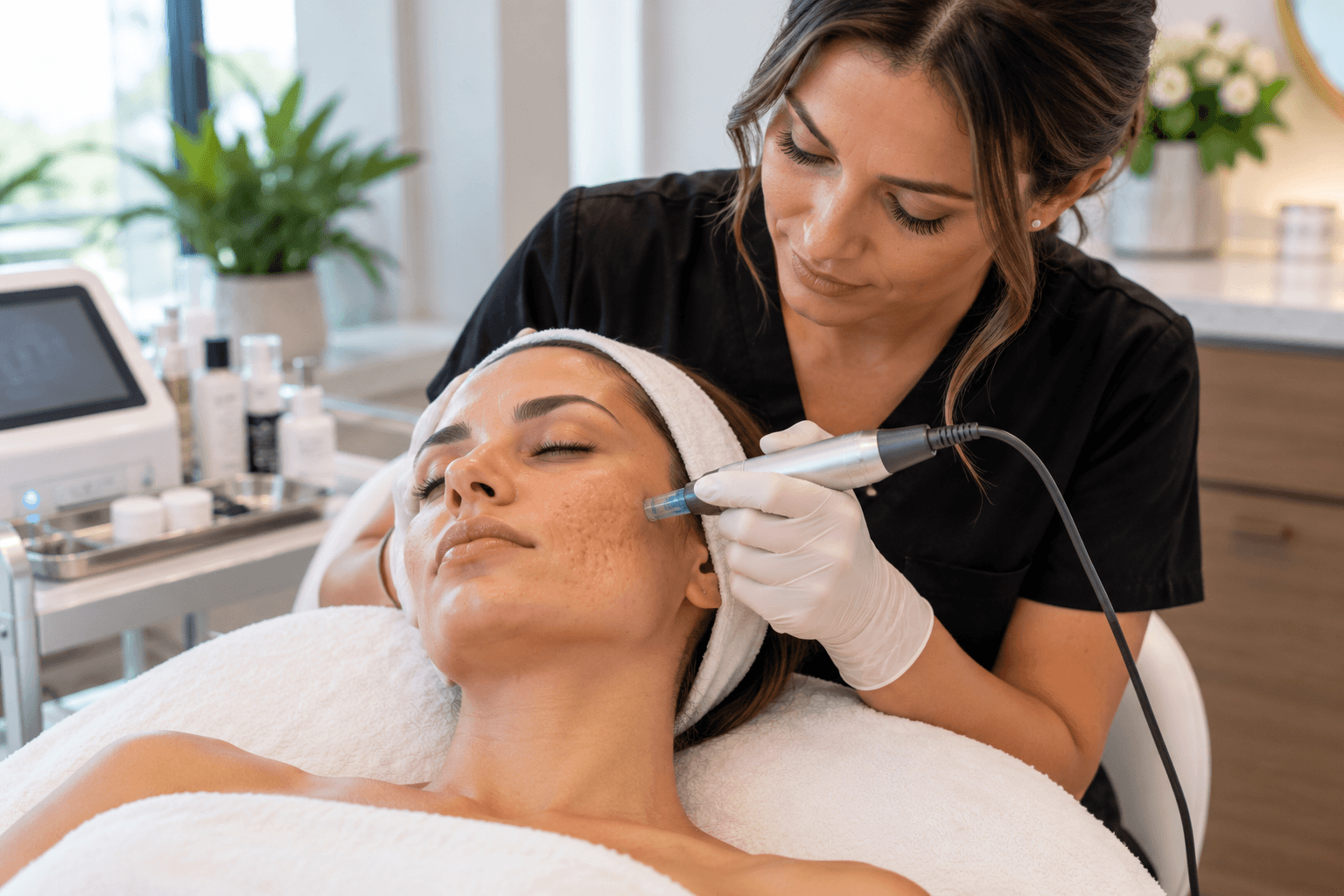
Microneedling uses fine needles to create controlled micro injuries in the skin, triggering the body's natural collagen production. Over a series of sessions, this can noticeably soften the depth of rolling and boxcar scars, improving overall texture and smoothness. Many Bentonville patients choose microneedling specifically because it works well on a range of skin tones with minimal downtime.
Chemical Peels for Surface Renewal
Chemical peels remove damaged outer layers of skin, encouraging fresh, more even textured skin to surface underneath. Peels can also help fade the discoloration left behind by old breakouts, making them a strong option for patients dealing with post acne marks rather than deep textural scarring.
ZO Skin Health for Ongoing Maintenance
A consistent ZO Skin Health regimen at home supports the results of in office treatments by keeping the skin barrier healthy and encouraging steady cell turnover between sessions. This combination of professional treatment and daily care is often what separates a good result from a great one.
Dermaplaning for Smoother Texture
For patients whose main concern is surface texture and a dull complexion around scarred areas, dermaplaning gently exfoliates the outermost layer of skin, leaving it smoother and better able to absorb other treatments and skincare products.
What Should You Expect During Recovery?
Recovery depends heavily on which treatment or combination of treatments is used. Microneedling typically causes redness similar to a mild sunburn for a day or two. Chemical peels may cause flaking for several days depending on the depth of the peel. Because textural scarring often responds best to a series of treatments spaced weeks apart, patience and consistency matter more than expecting dramatic change after a single visit.
Who Is a Good Candidate for Acne Scar Treatment?
Most people with textural or discoloration related acne scarring are candidates for these treatments, though the best plan depends on your skin type, scar depth, and whether you are still experiencing active breakouts. Active acne is generally addressed first, since treating scarring while breakouts are ongoing can be counterproductive. A consultation is the best way to map out realistic expectations and a treatment order that makes sense for your skin.
Why Local Skin Care Matters in Bentonville
Northwest Arkansas summers bring strong sun exposure, which can worsen post acne discoloration if skin is not properly protected during treatment. Working with a provider who understands both the science of scar treatment and the practical realities of caring for skin in our local climate makes a meaningful difference in how well results hold up over time.
Clearing the Way for Smoother Skin Ahead
Acne scars do not have to be something you simply learn to live with. Whether your main concern is texture, discoloration, or both, there is a realistic path toward smoother, more even looking skin. The team at Glotologi Med Spa works with Bentonville patients to build a treatment plan suited to their specific scarring and skin goals.
If you are ready to talk through your options, schedule a consultation and get a personalized recommendation for your skin.
Frequently Asked Questions
How many sessions does acne scar treatment usually take? Most patients need a series of treatments, often three to six sessions spaced several weeks apart, to see meaningful improvement in textural scarring.
Can acne scar treatment help with discoloration too? Yes. Chemical peels in particular are effective at fading post inflammatory discoloration left behind by old breakouts, in addition to improving overall skin texture.
Is acne scar treatment safe for darker skin tones? Many treatments, including microneedling, can be safely tailored for darker skin tones, though the specific approach and peel strength may be adjusted to reduce the risk of further discoloration.
Do I need to stop having active acne before treating scars? Generally, yes. Addressing active breakouts first helps prevent new scarring from forming while older scars are being treated.
How soon will I see results from acne scar treatment? Some improvement in skin texture can be noticeable within a few weeks, but full results from a series of treatments typically take a few months to fully develop as collagen rebuilds.