

Light Peel or Deeper Peel? How to Choose a Chemical Peel That Fits Your Skin and Your Calendar
October 2026
Chemical peels have a reputation problem. Mention one and some people picture the dramatic, red-faced recovery from that famous TV episode. Others think of a gentle glow treatment they can squeeze in before brunch. The truth is that both exist, along with plenty in between.
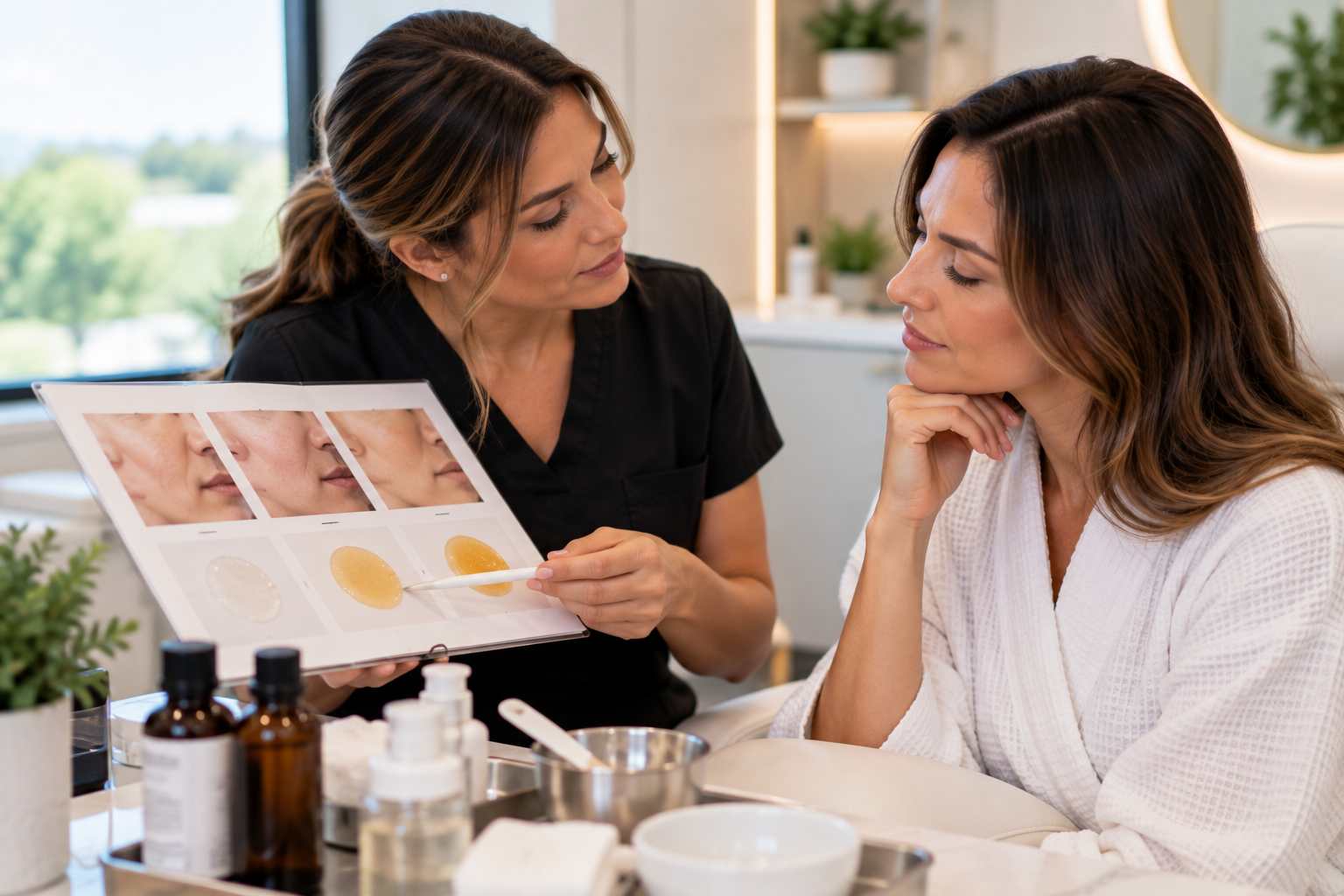
Choosing the right chemical peel comes down to three questions: what you want to fix, how much downtime you can realistically handle, and when you're going to be in the sun next. This guide walks through each one, with a few specific notes for students, busy professionals, and men who have never had a peel before.
What Does a Chemical Peel Actually Do?
A chemical peel uses a specialized solution to exfoliate the outer layers of skin, which encourages cell turnover and reveals smoother, more even skin underneath. It can reduce the look of fine lines, discoloration, and uneven texture.
At Glotologi Med Spa, chemical peels are customized in strength and formulation for concerns such as acne, pigmentation, and aging skin. The provider chooses the treatment based on your skin type and goals, rather than offering one standard peel for everyone.
What Is the Difference Between a Light Peel and a Deeper Peel?
Light peels offer gentle exfoliation with minimal downtime, while deeper peels produce more noticeable change along with a longer peeling phase. The right choice depends on your concern and how much recovery time fits your life.
The American Academy of Dermatology's chemical peel FAQs break peels into general categories:
- Refreshing or "lunchtime" peels, with roughly one to seven days of healing and often a series of three to five peels for the desired effect
- Medium peels, with roughly one to two weeks of healing and more visible peeling
- Deep peels, which require a surgical setting and weeks of recovery
For most med spa clients, the conversation centers on lighter to moderate options that can be repeated as part of a plan. Glotologi's aftercare guidance notes that redness, tightness, and mild to moderate peeling typically start within two to three days and can last up to a week, depending on the strength used.
Which Chemical Peel Is Best for Your Skin Goals?
The best chemical peel depends on what you're treating. Peels can address acne, acne scars, uneven tone, sun damage, and fine lines, but the strength and formulation should match the concern.
Is a Chemical Peel Good for Acne and Acne Marks?
Yes, chemical peels can be customized for acne-prone skin and are used to improve uneven tone and acne scars. This is a big one for Gen Z and younger adults, who often deal with active breakouts and lingering marks at the same time.
If you're in college at NWACC or the University of Arkansas, or just starting your career, a lighter peel series can be a practical way to work on texture and marks without major downtime. It's also smart to pair peels with a consistent routine. Glotologi offers ZO Skin Health, a professional-grade line that addresses acne and discoloration as part of a customized regimen.
For deeper textural scarring, your provider may suggest combining approaches. Glotologi's uneven skin texture and scars page covers options for both.
Can a Chemical Peel Help With Sun Damage?
Chemical peels are commonly used for sun damage, uneven tone, and discoloration. In Northwest Arkansas, where summers mean lake days at Beaver Lake, long bike rides, and outdoor festivals, years of sun exposure often show up as uneven pigment by your thirties and forties.
A series of peels, combined with diligent sunscreen use, can help even things out over time. If discoloration is your main concern, the pigmentation and skin discoloration page explains how Glotologi approaches it.
Can Chemical Peels Reduce Fine Lines?
Peels can soften the look of fine lines by refreshing the skin's surface. They work best for surface-level lines and texture. Deeper expression lines usually respond better to other treatments, such as neuromodulators, which is why many people combine approaches.
How Much Downtime Should Busy Professionals Plan For?
With a lighter peel, many people return to work right away, though skin may look slightly red or tight. With stronger peels, plan for visible peeling over several days, which may affect video calls, presentations, or events.
If your calendar is packed, a few planning tips help:
- Book lighter peels on a Thursday afternoon, so any peeling happens over the weekend
- Avoid scheduling a peel within a week or two of a major presentation, photo shoot, or wedding
- Keep your aftercare kit simple: gentle cleanser, moisturizer, and SPF
- Don't pick or peel flaking skin, even if it's tempting during a long meeting
Glotologi's guidance recommends keeping skin hydrated, avoiding picking or exfoliating, and using daily SPF while you heal.
What Should Men Know Before Getting a Chemical Peel?
Men can benefit from chemical peels just as much as women, especially for sun damage, rough texture, and acne scarring. The main difference is shaving. Your provider will advise you on when to shave before your peel and how long to wait afterward, since freshly shaved skin can be more sensitive.
Men who spend weekends outdoors, golfing, fishing, or riding the Back 40 trails, should also be prepared to take sun protection seriously while healing.
When Is the Best Time of Year to Get a Chemical Peel in Bentonville?
Fall and winter are generally the best seasons for chemical peels in Bentonville, because there's less intense sun exposure while your skin heals. That makes it easier to protect fresh skin and maintain results.
Northwest Arkansas summers are bright and long, and freshly peeled skin is more vulnerable to the sun. The AAD advises daily sunscreen once skin has healed and notes that strict sun avoidance is especially important after stronger peels. Starting a peel series in October or November gives you several months of lower UV before spring.
That said, lighter peels can be done year-round with careful sun protection. Your provider can adjust the plan if you have a beach vacation or outdoor event coming up.
How Many Chemical Peels Do You Need?
Some people notice an improvement after one session, but optimal results usually come from a series spaced several weeks apart. Glotologi creates a personalized plan based on your skin and goals.
Results aren't permanent. Your skin keeps aging, and sun exposure can bring back discoloration, so maintenance peels and a strong home routine help protect your progress.
Are Chemical Peels Safe for Every Skin Tone?
Chemical peels can be performed on many skin types, but darker skin tones require extra care to avoid unwanted pigment changes. The AAD recommends that people with darker skin work with a provider experienced in treating darker skin tones.
That's one more reason a consultation comes first. Your provider will consider your skin type, history, and goals before recommending a peel strength.
If you want a deeper look at the recovery process itself, Glotologi's blog on what really happens before and after a chemical peel walks through it step by step.
Peel Good, Look Good: Picking Your Perfect Peel
The right chemical peel isn't the strongest one or the trendiest one. It's the one that matches your skin, your schedule, and the season. Get those three right, and you're far more likely to love your results.
Ready to find your peel? Book a consultation at Glotologi Med Spa in Bentonville, and your provider will recommend the strength and timing that make sense for you.
Frequently Asked Questions About Chemical Peels
How long does peeling last after a chemical peel?
Peeling typically lasts a few days to about a week, depending on the strength of the peel.
Can I wear makeup after a chemical peel?
It depends on the peel. Lighter peels may allow makeup sooner, while stronger peels require more healing time. Follow your provider's aftercare instructions.
What is the best chemical peel for acne scars?
There's no single best peel. Your provider will choose the strength and formulation based on your skin type, the type of scarring, and how much downtime you can manage.
Is a chemical peel painful?
Most people feel tingling or warmth during the treatment. Stronger peels may feel more intense. Afterward, skin may feel tight or slightly sensitive.
Where can I get a chemical peel in Bentonville, Arkansas?
Glotologi Med Spa offers customized chemical peels at 3500 SW Regional Airport Blvd, Suite 6, in Bentonville, with treatment plans based on your skin type and goals.